Plan the System
Define the classes, responsibilities, relationships, records, and workflows needed for the initial fleet-management foundation.
Ghostline Labs Development Archive
A dated record of the early planning, Java classes, Swing interfaces, and operational systems developed for the FleetTrack Pro prototype.
This log preserves major milestones, lessons learned, screenshots, and planned next steps from the project’s early development period.
Project Context
FleetTrack Pro began as an object-oriented Java project focused on organizing trucks, drivers, employees, and business records. The scope later expanded into a graphical operations system.
Define the classes, responsibilities, relationships, records, and workflows needed for the initial fleet-management foundation.
Create Java models and management classes for vehicles, drivers, employees, evaluations, and system operations.
Use Java Swing to connect backend objects to dashboards, forms, lists, navigation, and operational screens.
Development Timeline
The project moved beyond basic console planning and into graphical user-interface development using Java Swing. The main FleetTrack dashboard was created, and work began on the employee-management side of the application.
These images show the application at the development stage documented in this entry.
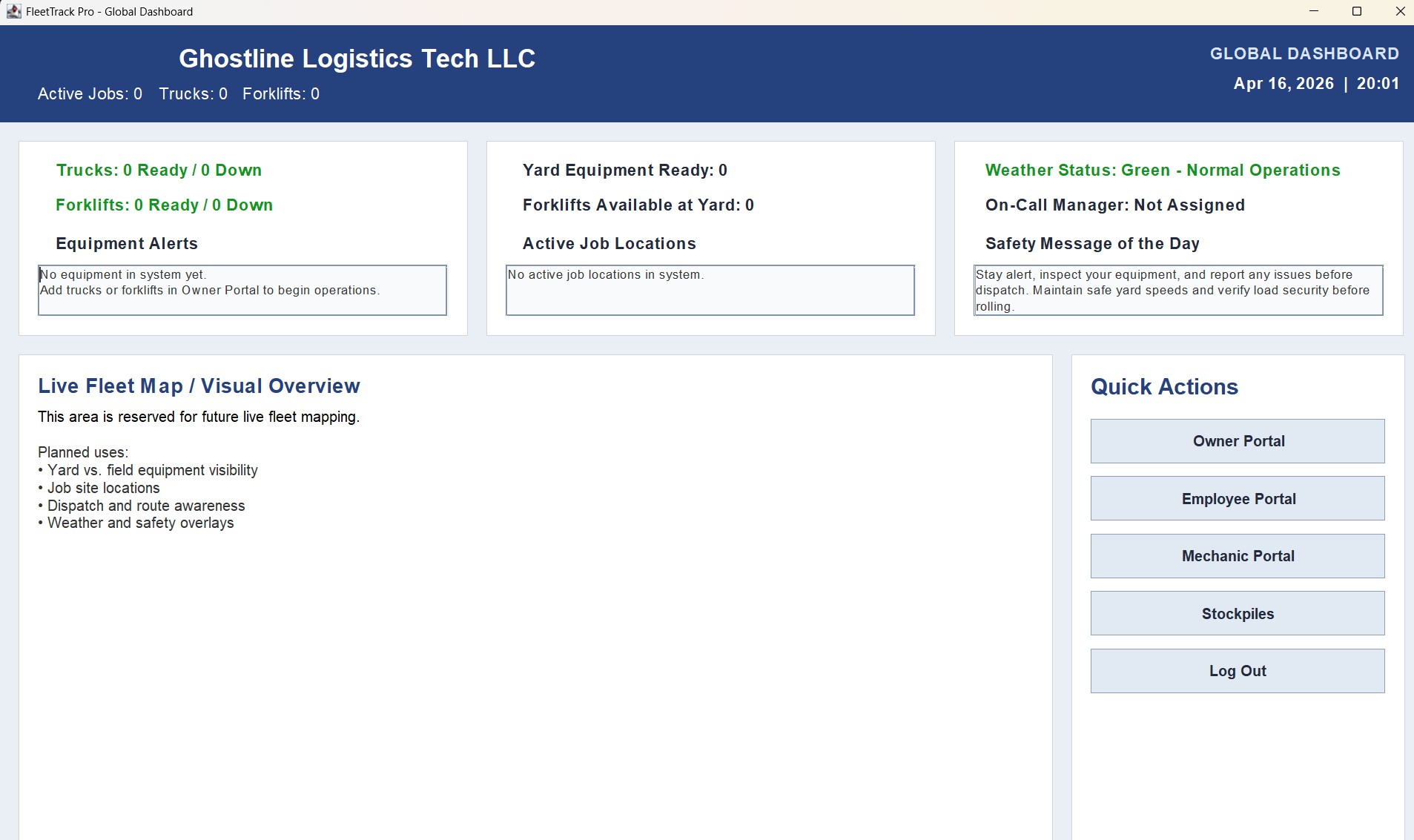
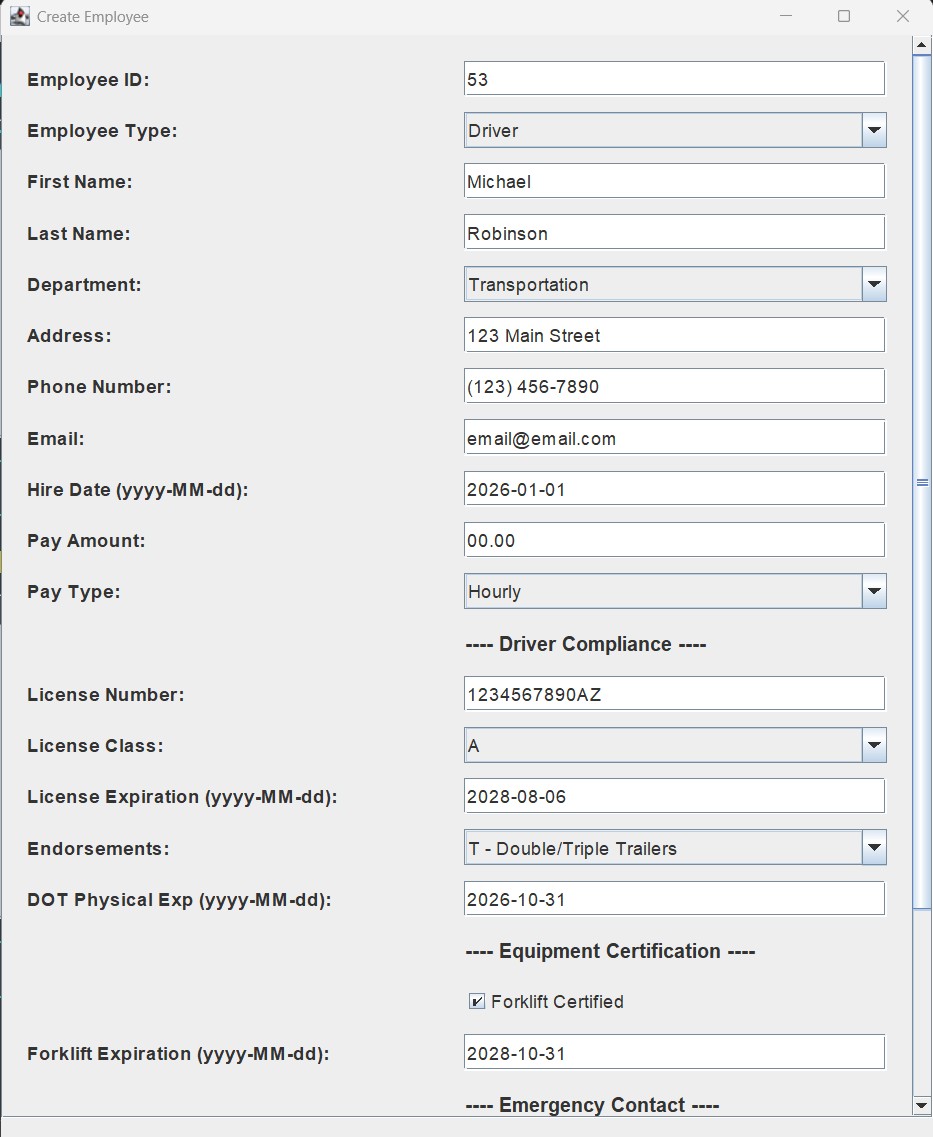
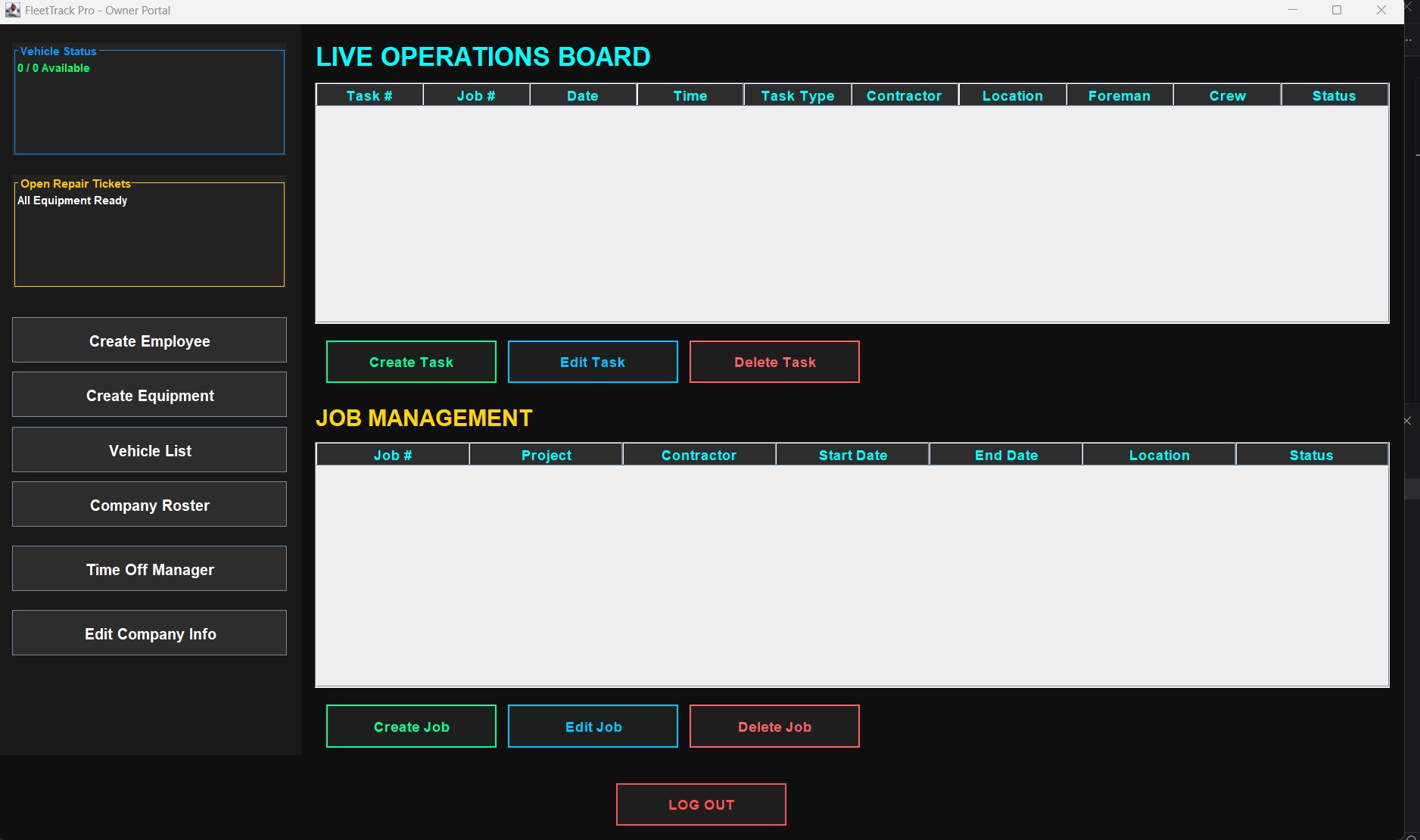
Backend development continued as the project expanded into multiple working Java classes. This stage focused on organizing realistic fleet data into objects that represent trucks, drivers, employees, and system-management logic.
findEmployeeById()
Separate system entities into focused classes with clear responsibilities.
Connect trucks, drivers, employees, and manager operations through defined relationships.
Structure application data so the project can support additional features later.
Planning began by defining the original Fleet Management Software structure and identifying its major system components. The initial focus was on outlining how the application should grow over time.
The original plan was to begin with a console-based Java application so that logic, testing, and object-oriented concepts could be developed before transitioning to a full graphical interface.
Development Archive
This log records the state of FleetTrack Pro at specific points in its development. Later versions may contain systems, interfaces, and workflows that were not yet present when these entries were written.